

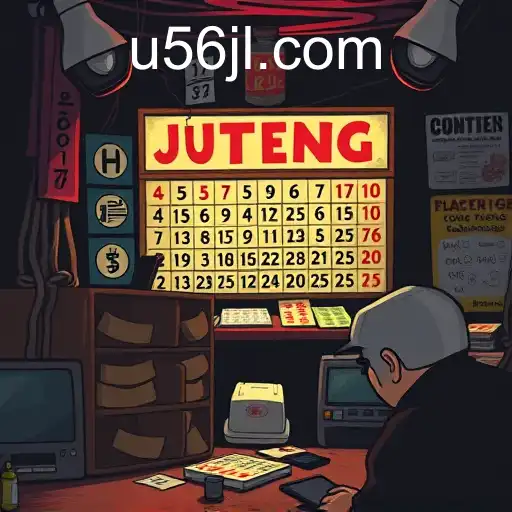

Jueteng, a clandestine numbers game, is deeply woven into the socio-economic fabric of the Philippines. Originating during the Spanish colonial period, this illegal but widely accepted betting activity remains popular among Filipinos despite persistent law enforcement efforts to eliminate it. The game involves numerous participants, from the ordinary bettor to a complex network of coordinators and protectors. Understanding Jueteng requires delving into its historical roots, the mechanics of its operation, and its enduring presence in Filipino society.
Jueteng's origins can be traced back to 1867, where it was first introduced by Chinese-Filipino immigrants in Manila. Its name derives from the Chinese words “hue” meaning flower, and “teng” meaning bet. Despite being illegal, Jueteng flourished because it was simple, affordable, and offered a quick turn of fortune. The game has since evolved, with changes in its operations reflecting broader socio-political shifts within the country.
The basic principle behind Jueteng involves choosing a combination of numbers, typically from 1 to 37, or sometimes up to 38, depending on local variations. Bettors select two numbers, and if both come up in the day’s draw, they win a prize many times over their initial wager. Despite its straightforward mechanics, the process behind Jueteng is complex and organized.
Behind the scenes, a network of cobradores (collectors) and cabo (supervisors) handle bets and returns. The draw itself is often a closely guarded affair, with winning numbers produced either through random selection or manually manipulated to ensure certain outcomes. While it provides entertainment and excitement for bettors, it serves as a considerable source of income for organizers and their protectors within local governments or law enforcement.jljl33 live
Jueteng is both a reflection of and a reaction to the socio-economic conditions in the Philippines. It thrives in poor urban and rural areas where legitimate employment opportunities are limited. For many, it represents a potential escape from poverty, however fleeting. It also serves as a circuit for liquidity, with many Filipinos viewing it as a legitimate form of entrepreneurship and employment, albeit an informal one.
Despite its illegality, Jueteng contributes to the local economy by injecting cash flow through daily betting and winning distributions. However, it also siphons money away from more stable, long-term investments and savings, thereby perpetuating the cycle of economic dependence for many households. This paradoxical relationship with local economies makes Jueteng a key concern for socio-economic development.
Jueteng's existence is perpetuated, in part, by political complicity. Local politicians and law enforcement officers are often accused of receiving protection money from gambling operators, effectively embedding Jueteng within the political landscape. This arrangement ensures Jueteng’s survival as a tolerated vice, while also undermining the rule of law and public trust.
The influence of Jueteng extends into national politics, wherein operators have been known to bankroll political campaigns in exchange for favorable legislation or a blind eye toward operations. This intricate web of influence and protection highlights the entangled relationship between public service and illicit activities within the Philippines.jilipub
Efforts to combat Jueteng have been sporadic and often undercut by the very entities tasked with its eradication. Legal gambling alternatives, such as the Philippine Charity Sweepstakes Office's (PCSO) Small Town Lottery (STL), were introduced to offer regulated betting and curb Jueteng’s prevalence. However, these initiatives have met limited success, as bettors and operators often regard Jueteng as more lucrative and flexible.
Various administrations have also launched crackdowns, yet these efforts are typically short-lived. The extensive network and deep-rooted societal acceptance of Jueteng make it resilient to superficial reforms. Without addressing the underlying socio-economic and political issues perpetuating Jueteng, efforts to eradicate it face formidable challenges.jl6.com
Beyond economics and politics, Jueteng is ingrained in Filipino culture. It boasts a community aspect, serving as a daily ritual that engages entire neighborhoods. The excitement of the draw, the communal thrill of winning or losing, and the folklore surrounding lucky numbers and bets create an environment where Jueteng is not just a game, but a cultural institution. jl99 win
Its integration into Filipino daily life makes Jueteng more than just an illegal activity. It represents hope, community, and resilience against adversity. As long as these underlying elements remain, Jueteng is likely to continue, albeit evolving in form and function.
Understanding Jueteng involves acknowledging the complex interplay between history, culture, economics, and politics. It is a testimony to the resilience of traditional practices amidst modern transformations. While the quest to eliminate Jueteng continues, its enduring presence signifies a persistent challenge that mirrors larger societal issues in the Philippines.
rpjili
Explore the captivating universe of PharaohCoins, a new immersive game that combines ancient history with modern technology, offering players an engaging and exhilarating gaming experience.

Explore the thrilling world of RomanLegend, a captivating game that combines strategy and historical grandeur, revolutionizing the gaming experience.

Dive deep into the world of Egyptian mythology with AnubisWrath, exploring its captivating gameplay, intricate rules, and the realm of modern-day digital entertainment.

Explore the exhilarating features of MasterJoker, a captivating online game that combines strategy and excitement.

Dive into the enchanting universe of JokersCoins, a captivating game that combines strategy and intrigue. Learn about its intriguing features, gameplay rules, and how current events shape its ever-evolving ecosystem.

Explore the captivating world of BaoBoonChin, a game that brings together strategy, skill, and current events into an immersive experience.
